3 Oct – 6 Dec 2026
 |
Daily: 9am – 6pm |
Admission Free admission |
The Rise of Sanctuary Technologies is the third iteration of In the Ether, a festival that brings together science, technology, and society through art, installations, talks, and workshops. This year's edition explores “sanctuary technologies”: ideas, practices, and experiments that use technology to give people greater choice and autonomy, allowing them to create and share knowledge responsibly, and support collective wellbeing. In this context “Sanctuary”, is not a place of retreat. It is a way of thinking about how technology might help people and communities adapt and thrive now and in the future.
The festival is structured around three themes Imagine, Investigate and Experiment. Imagine asks questions about the technologies we already live with and the directions of technological development we may choose to pursue. Investigate brings together real-world, research-driven projects that examine how technological systems operate, how they shape society, and what alternatives might emerge. Experiment turns to microchips and open-source hardware, whose designs are publicly available for anyone to study and build upon, exploring alternative approaches to designing and building technology from the ground up.
In the Ether—The Rise of Sanctuary Technologies is presented by ArtScience Museum with key contributors Vensa and Ethereum co-founder Vitalik Buterin. The festival brings together contributions from a diverse network of researchers, artists, and practitioners.
Image credits: Courtesy of Inhwa Yeom.
Courtesy of the artist and World Economic Forum.
Location: Basement 2, Circulation
Mimus, created by roboticist and artist Dr Madeline Gannon with her research studio ATONATON, transforms an industrial robot arm into an interactive system that responds to the presence and movements of visitors. Although it has no human features, its behaviour can appear curious, hesitant, attentive, or playful. The work explores how people interpret machine behaviour and why even simple interactions can evoke empathy and emotional connection.
Courtesy of Andre D. Zonenberg.
Location: Basement 2, ArtScience Laboratory
Open Chip Lab explores how microchips can be made, designed and understood beyond large industrial facilities. Through the work of Matthew Hartensveld, Matt Venn, and Andrew D. Zonenberg presented in ArtScience Museum, visitors encounter homemade chipmaking tools, shared silicon wafers, youth-designed chips and microscopic views inside silicon, showing that chips can be explored, learned from and even made by curious individuals.
Image credits:
Photo: Piercarlo Quecchia – DSL Studio / @piercarloquecchia - @dsl__studio.
Courtesy: Fondazione Prada.
Location: Basement 2, Circulation
Artificial intelligence (AI) often appears invisible and immaterial, yet every system depends heavily on physical resources and human labour. Combining scientific rigour with visual storytelling, this project traces the production and operation of a familiar AI system, from mineral extraction and manufacturing to logistics, energy use, and data processing. It reveals the vast infrastructures behind familiar technologies and their connections to people, resources, and the planet.
© ️Bram Versteeg.
Location: Basement 2, Circulation
At the centre of The Solar Share is a one-square-metre bioreactor that uses sunlight to grow spirulina— edible microalgae rich in protein. Combining biological processes, digital technologies, and speculative design, the project treats its daily yield as a form of currency, imagining an economic system in which the production of biomass, rather than finances, becomes a measure of value. In doing so, it explores how economic value might be reorganised around the finite energy and biological productivity available within the biosphere.
Courtesy of the artist.
Location: Level 1, Lobby
A drone equipped with image-recognition software searches a field for four-leaf clovers, automating a childhood treasure-hunt usually shaped by patience, chance, and close attention. By transforming a playful search for luck into a machine task, this artwork asks what may be gained—and what may be lost—when technology seeks to optimise even the smallest moments of everyday life.
Courtesy of the artist.
Location: Level 1, Lobby
Drawing on the Korean myth of the Sun and Moon Dogs (Bul-gae), creatures said to cause eclipses, artist Inhwa Yeom uses imagery generated by an artificial intelligence (AI) to bring an ancient story into the present. Through its representation of Asian women as Bul-gae, War Dance explores how cultural expectations and stereotypes shape identity, and how these biases can carry over into contemporary technologies. This connection is particularly significant in AI, where systems trained on existing data, images and cultural narratives can reproduce and amplify the societal biases they contain.
Courtesy of the artist.
Location: Level 1, Lobby
As contemporary life becomes increasingly shaped by algorithms, artist Yoshi Sodeoka highlights that digital systems are not objective mirrors of reality, instead he explores the growing tension between lived experience and its computational representation. Drawing on algorithmic processes and generative visual systems, Migratory Parameters reveals how mathematics and data can uncover patterns beyond human perception while simultaneously reshaping our understanding of the world.
Courtesy of the artist.
Location: Basement 2, Circulation
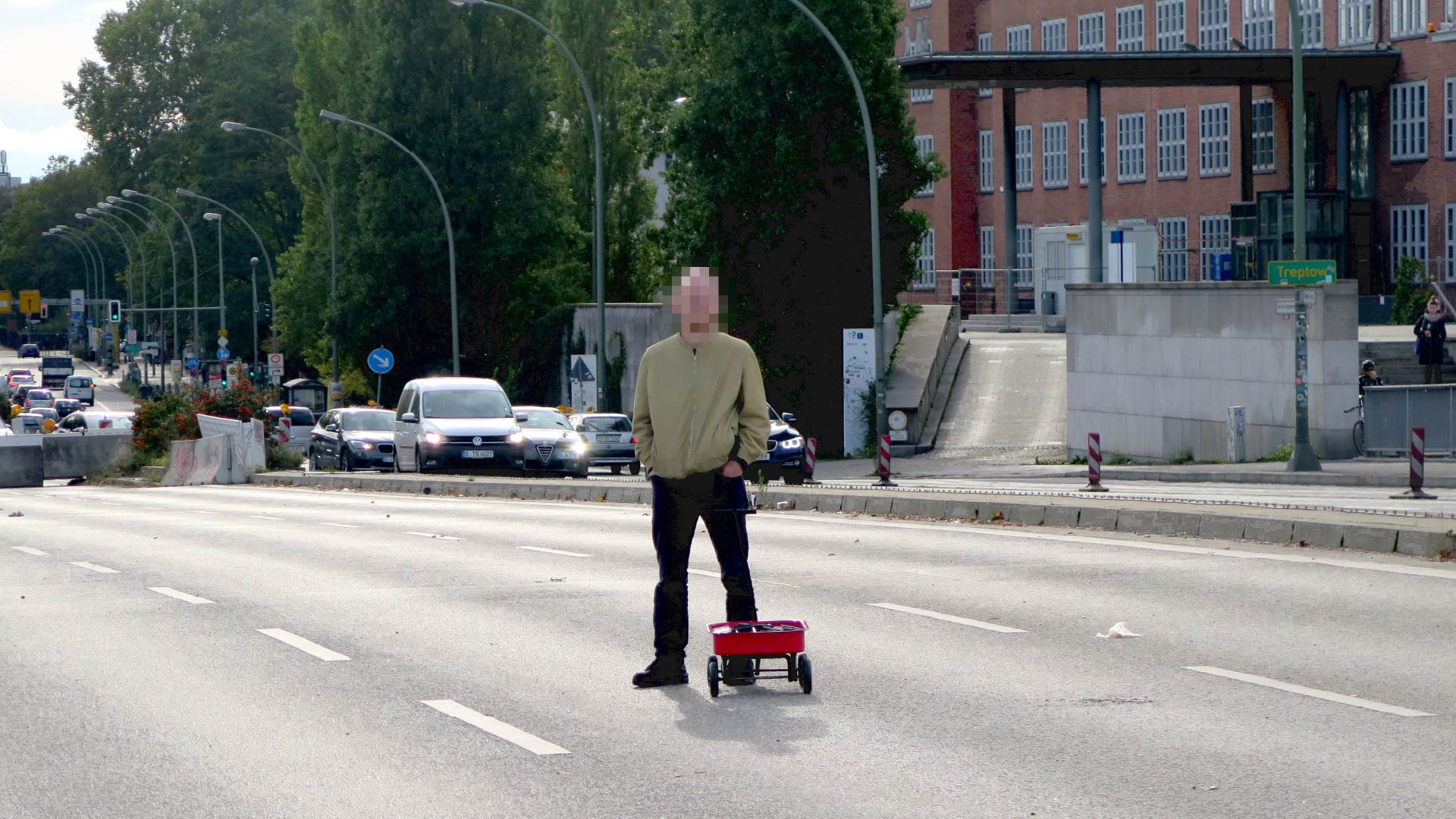
Weckert placed 99 smartphones in a rudimentary metal wagon and walked through the streets of Berlin. The combined location data from the smartphones led Google Maps to register brief traffic congestion, redirecting drivers to other routes. This performance documentation shows how digital systems can influence our everyday decisions, but also how easily we, or others, can influence the information those systems rely on. Weckert asks us how much trust we want to place in the systems that guide our everyday decisions?

Date: 23, 27 & 29 Nov and 1 Dec, 1pm – 5pm
Location: ArtScience Museum, Level 4
Free admission with registration
Almost everything around us seems to include a microchip, but few of us have the chance to make one of our own. This beginner-friendly workshop gives you the opportunity to design a simple chip on your laptop and see how it works.
You will start with an idea, turn it into a design, and test it as you go. No engineering experience is needed, just a laptop and curiosity. By the end of the workshop, you will understand what it takes to turn an idea into a chip, then have your completed chip delivered to you.
Image credits: Courtesy of Tiny Tapeout.
Registration opens soon. Please check back for updates.
Date: 3 Oct, 10.30am – 1.30pm
Location: ArtScience Laboratory, Ripple Room
Free admission with registration
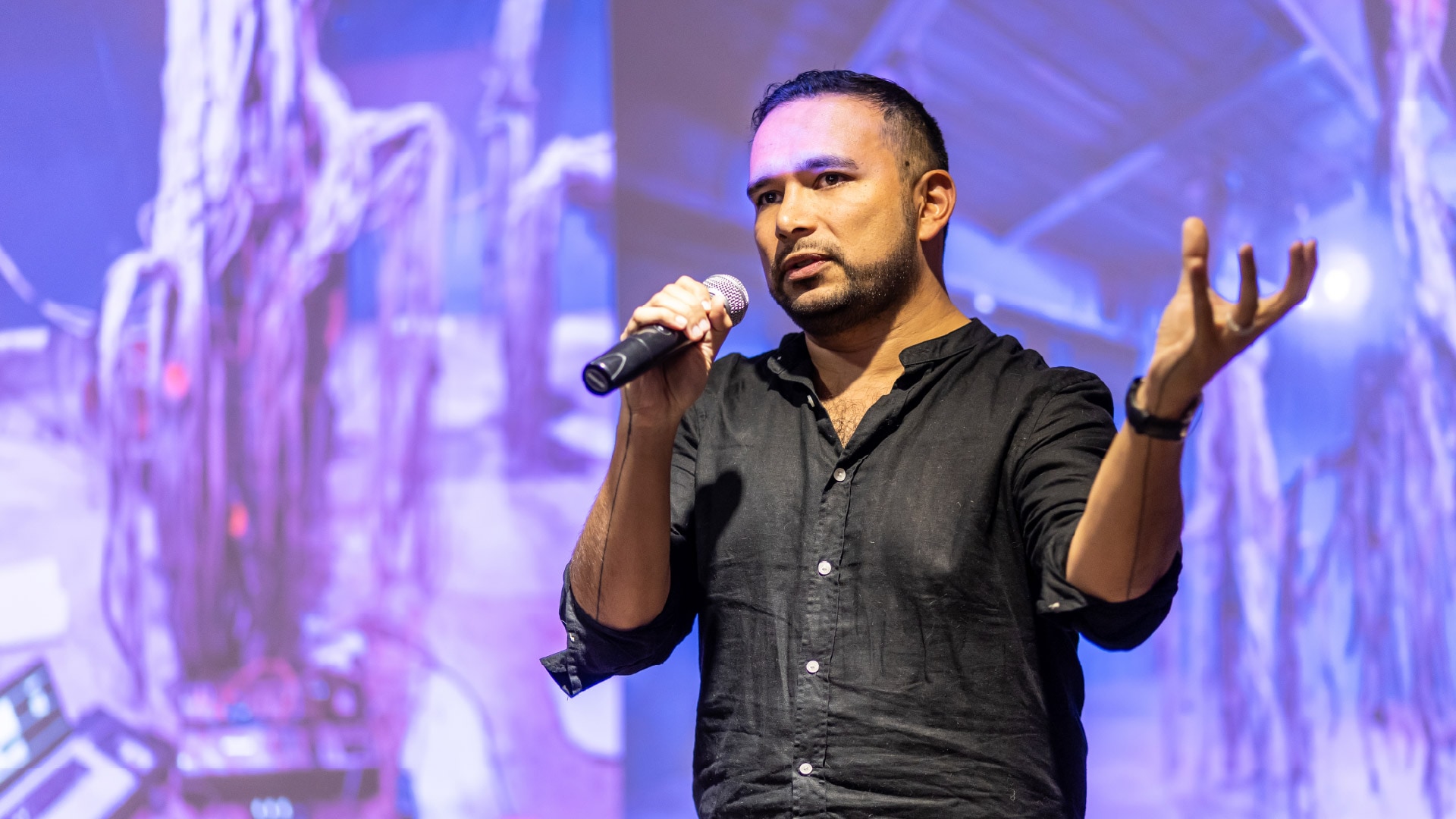
This practical workshop explores how cultural memory can be preserved through distributed digital systems rather than relying on a single institution, platform or server. Drawing on the experience of Colombia’s Virtual Museum of Historical Memory, participants will work with a small collection of images, recordings, documents or texts using the InterPlanetary File System (IPFS) platform.
Through a series of guided exercises, participants will create a small digital archive, prepare metadata, and learn how to make collections more accessible across different locations and communities. The workshop introduces the basic principles of decentralisation through direct experience, encouraging participants to consider both the possibilities and limitations of distributed archival systems.
Image credits: Rodrigo de la Fuente. Courtesy of the artist.
Date: 3 Oct, 3.30pm – 5.30pm
Location: ArtScience Laboratory, Ripple Room
Free admission with registration
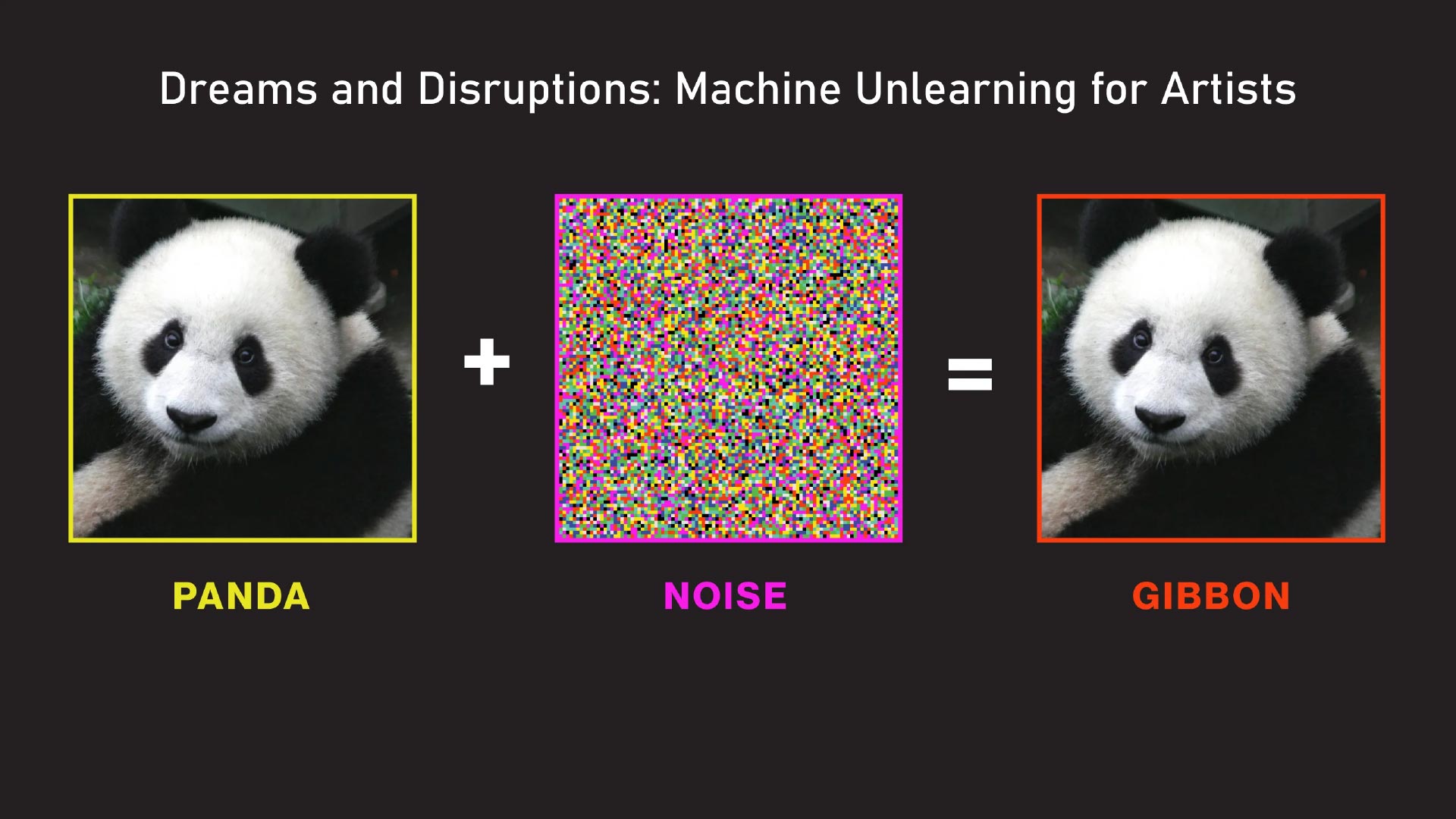
This hands-on workshop introduces participants to the inner workings of contemporary artificial intelligence (AI) systems through the lens of artistic experimentation and critical practice. Starting with the fundamental components that shape machine learning models, participants will explore how AI systems can be questioned, manipulated and creatively repurposed. Rather than treating AI as a fixed technological tool, the workshop approaches it as a cultural and political system that can be investigated, challenged and transformed.
Through practical exercises, participants will gain a clearer understanding of how AI systems are trained, how they produce outputs, and how artists can intervene in these processes to reveal hidden assumptions, biases and limitations.
Image credits: Courtesy of the artist.

QED advances the use of open technologies through education, experimentation, and public engagement, empowering people to participate in the development and understanding of the technologies shaping our world.
Permanent Exhibition
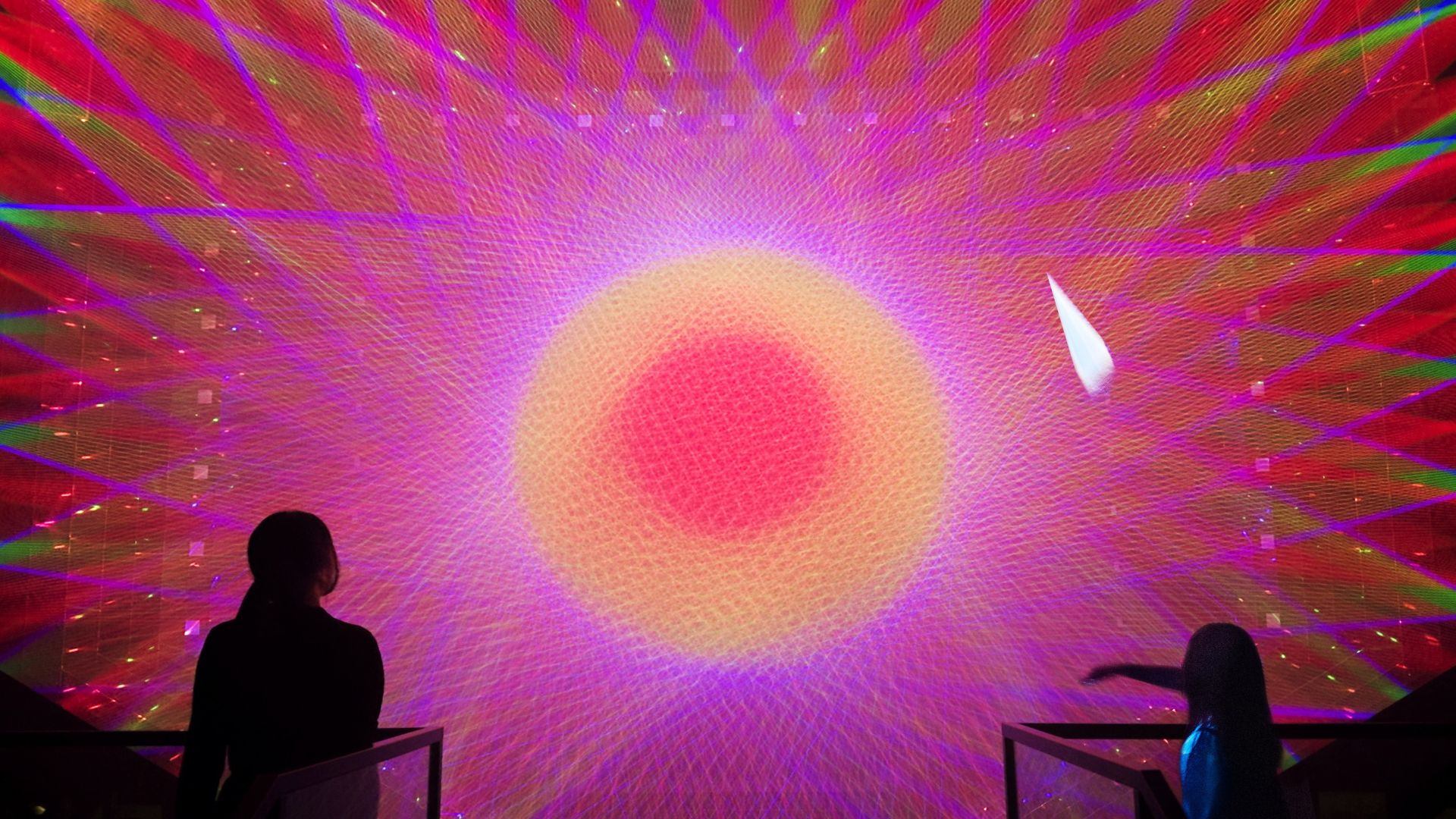
Immerse yourself in a world of art, science, magic and metaphor through a collection of interactive installations.
Paiza and Elite members may redeem their complimentary ticket at the Museum Box Office for visits between 2 – 27 Nov 2026.
Daily
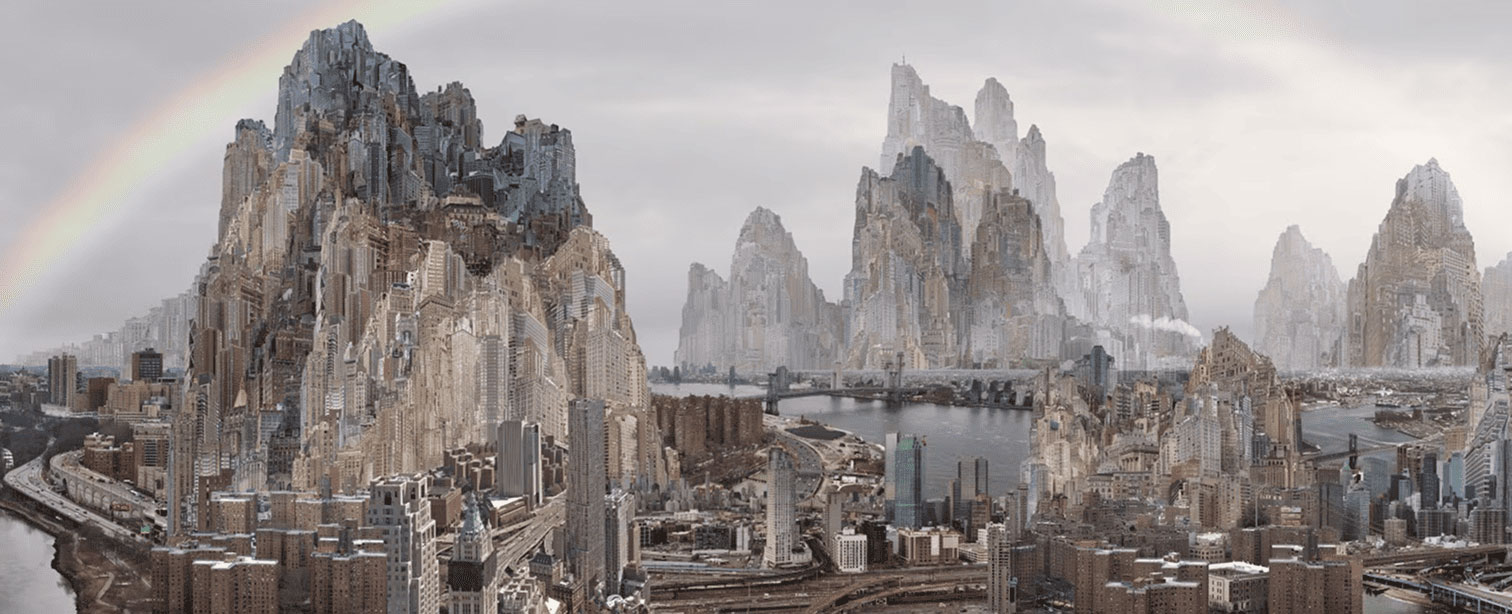
ArtScience Interlude is an ongoing programme of time-based media artworks in the Level 1 Lobby of ArtScience Museum. At the strike of every hour, a digital artwork plays on the LED screen – a welcome pause for contemplation, reflection and a profound awareness for moments both fleeting and lasting.
Daily
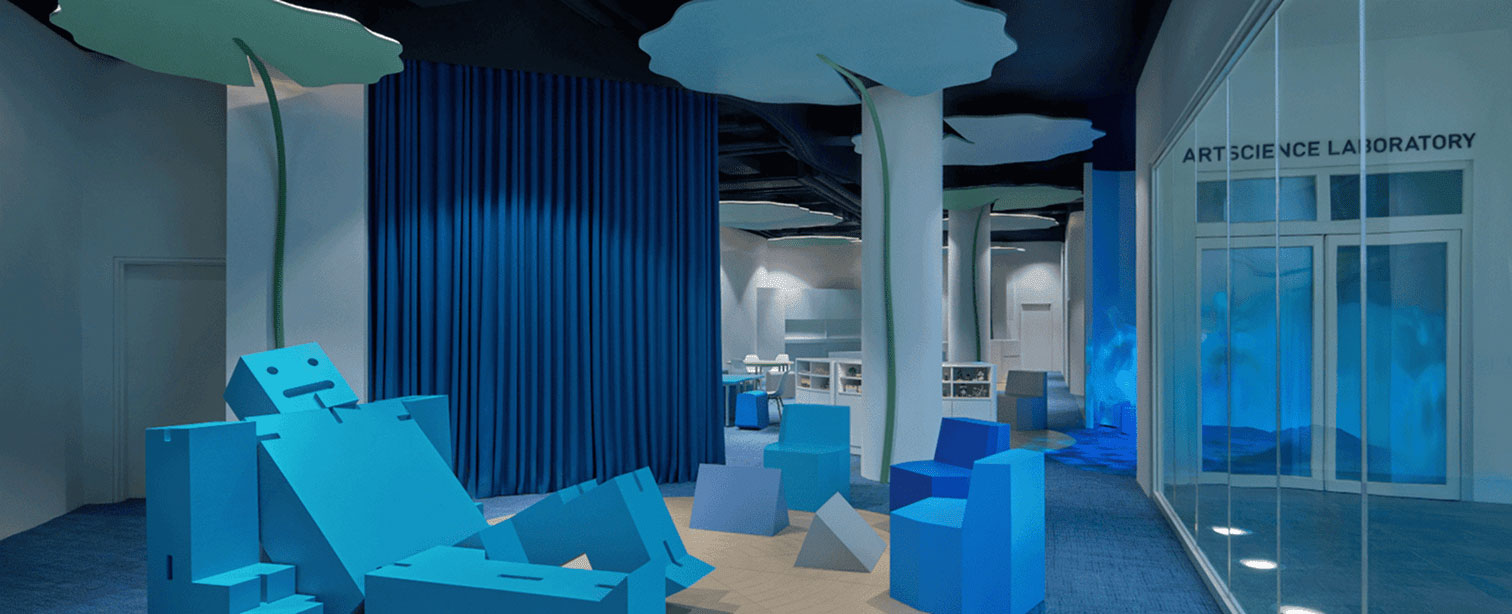
Enter an unorthodox learning space where experiments are encouraged, creativity thrives and different disciplines converge.